
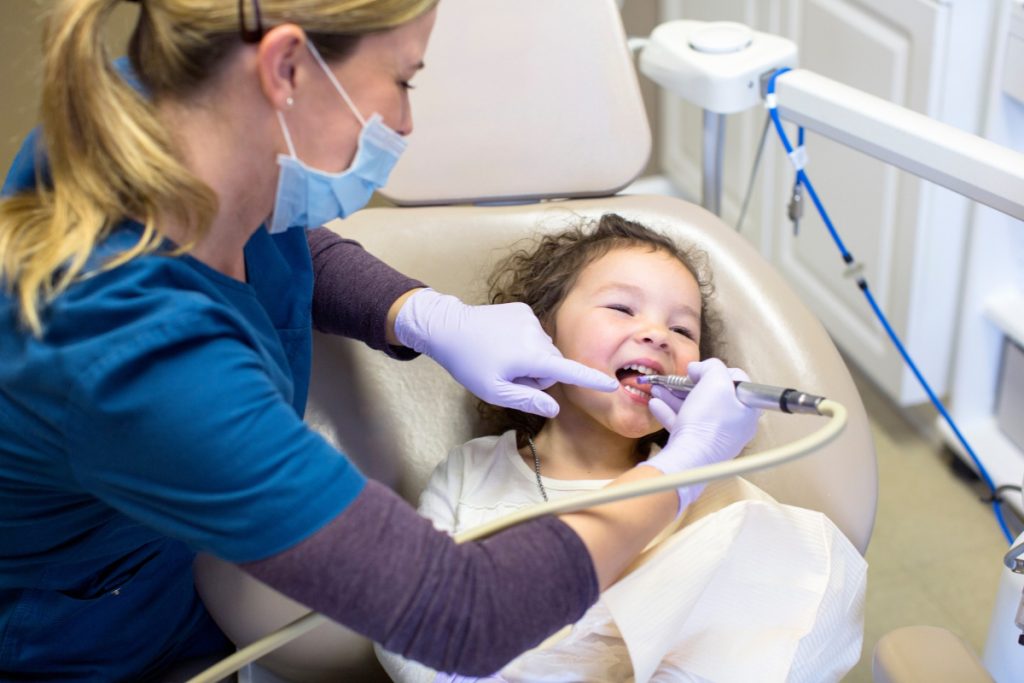
Your child opens their mouth to show you a new tooth, but something looks unusual. Instead of replacing the baby tooth, the permanent tooth appears to be growing directly behind it. You may see two rows of teeth in the same area.
Parents sometimes call this appearance “shark teeth.”
Although it can look concerning, this situation is relatively common during childhood dental development. At Modern Dental, parents can have their child’s developing teeth examined to determine whether the baby tooth is likely to fall out naturally or needs attention.
Understanding why this happens can help you respond without unnecessary worry.
Why Do Permanent Teeth Grow Behind Baby Teeth?
Baby teeth usually loosen as permanent teeth develop and their roots resorb. As the roots shorten, the baby teeth eventually fall out.
However, the permanent tooth does not always emerge directly beneath the baby tooth. Sometimes, it erupts slightly behind the primary tooth.
This is particularly common with lower front teeth. The baby tooth may remain in place because its root hasn’t resorbed enough. As a result, the permanent tooth becomes visible while the baby tooth is still present.
At What Age Does This Usually Happen?
Most children begin losing baby teeth around age six, although the timing varies. The lower front permanent incisors often erupt first.
During this transition, a child may develop a second row of teeth. Some children lose baby teeth earlier, while others follow a slower eruption pattern.
The timing alone does not always indicate a problem. However, delayed tooth loss or unusual eruption patterns may justify a dental examination.
Should Parents Worry About Shark Teeth?
In many cases, the situation resolves on its own. If the baby tooth is already loose, it may fall out as the permanent tooth continues erupting.
Tongue pressure and normal oral development may help the permanent tooth move forward. However, not every case resolves without treatment.
Our pediatric dentist should evaluate the situation when:
- The baby tooth remains firmly attached
- The permanent tooth continues erupting
- The child experiences discomfort
- The gums become swollen
- Food repeatedly becomes trapped
- Several teeth appear crowded
- The eruption pattern looks unusual
An examination can help determine whether pediatric dental care is appropriate.
Should You Pull Out the Baby Tooth at Home?
Parents should avoid forcefully removing a baby tooth that is still firmly attached. Pulling a tooth before it is ready can cause pain, bleeding, or injury to surrounding tissues.
If the tooth is naturally very loose, gentle movement during normal activities may help it come out. However, do not use strings, tools, or excessive force. If a permanent tooth is emerging and the baby tooth won’t loosen, schedule a dental exam.
When Might a Baby Tooth Need Extraction?
A dentist may recommend removing a retained baby tooth if it interferes with the permanent tooth’s eruption.
The decision depends on several factors.
These include:
- How loose the baby tooth is
- The position of the permanent tooth
- Available space in the dental arch
- The child’s age
- The surrounding gum condition
- Whether the tooth is causing discomfort
Extraction isn’t automatically required when two rows of teeth are visible.
At Modern Dental, Dr. Royce can evaluate the eruption pattern and discuss whether monitoring or treatment is appropriate.
What Happens During a Children’s Dental Examination?
A dental visit usually begins with a discussion about the child’s symptoms and development.
The dentist examines the teeth, gums, and bite. If necessary, dental X-rays may be recommended to evaluate the position of developing teeth.
The professional may check whether the retained baby tooth is loose and whether enough space exists for the permanent tooth.
Parents can ask questions about expected eruption timing and home care. If treatment is recommended, the procedure and available comfort measures should be explained before proceeding.
Can the Permanent Tooth Move Into the Correct Position Naturally?
When the retained baby tooth falls out, the permanent tooth may gradually move toward a more normal position. However, the amount of movement depends on available space, eruption direction, and other factors.
If significant crowding is present, the tooth may not align naturally. Some children may benefit from an orthodontic evaluation.
This does not necessarily mean braces are needed right away. An orthodontic assessment can help determine whether monitoring or future treatment is appropriate.
How Can Parents Keep the Area Clean?
Two rows of teeth can create additional spaces where plaque and food collect. Careful oral hygiene is important.
Encourage your child to:
- Brush twice daily with fluoride toothpaste
- Clean around both rows of teeth
- Floss between teeth that touch
- Avoid picking at the gums
- Tell you if chewing becomes painful
- Avoid forcing a baby tooth to come out
Younger children may need help reaching the area. A parent can gently assist with brushing until the child can clean effectively.
When Should You Schedule a Dental Visit in Boise?
Schedule an examination if the permanent tooth continues to erupt while the baby tooth remains firm. Seek care if your child develops swelling, persistent pain, or difficulty chewing.
Parents in Boise, Meridian, Eagle, and nearby Treasure Valley communities can use routine dental visits to monitor changes in their children’s teeth. Regular examinations can also help identify crowding, cavities, and other developmental concerns.
Give Your Child’s Developing Smile the Attention It Needs
Seeing a permanent tooth behind a baby tooth can be surprising, but it doesn’t always mean a serious problem.
The important question is whether the permanent tooth has enough space to erupt properly.
If your child has two rows of teeth or a baby tooth that will not loosen, Dr. Royce can evaluate the situation and discuss the next steps at Modern Dental. Schedule a children’s dental examination to support healthy tooth development.
Frequently Asked Questions
1. Is it normal for a permanent tooth to grow behind a baby tooth?
Yes, this can occur during normal dental development, particularly with lower front teeth. A dentist can determine whether it needs attention.
2. Will the baby tooth eventually fall out?
Often, yes. However, a firmly attached baby tooth may remain in place and require evaluation.
3. Does my child need a tooth extraction?
Not always. Extraction may be recommended when a retained baby tooth interferes with permanent tooth eruption.
4. Can shark teeth cause crooked permanent teeth?
They may occur alongside crowding or unusual eruption patterns. An examination can help determine whether orthodontic monitoring is necessary.
5. Should I schedule an appointment if my child has two rows of teeth?
Yes, particularly if the baby tooth is not loose or the permanent tooth continues emerging.
6. Can a children’s dentist in Boise check tooth development?
Yes. A dental examination can assess eruption timing, tooth position, and whether additional treatment is needed.