
Losing a back tooth may not seem like a major concern, especially when the gap is hidden. You can still smile, speak, and eat most foods. But over time, you may notice that chewing feels different.
Perhaps you favor one side of your mouth or avoid certain foods because they are difficult to chew.
Missing molars can affect how chewing pressure is distributed across your remaining teeth.
At Modern Dental, patients can explore tooth replacement options that help restore chewing function and address the effects of tooth loss.
Dental implants are a primary option, but the right treatment depends on your oral health, bone condition, and individual needs. If you are looking for dental implants in Boise, visit our dental practice today for a dental consultation.
Why Are Back Teeth Important for Chewing?
Molars and premolars help break down food before swallowing. Their broad chewing surfaces are designed to crush and grind food.
When a back tooth is missing, neighboring teeth may need to handle more chewing pressure. Some patients adapt by chewing primarily on the opposite side.
Others avoid firm foods such as nuts, raw vegetables, or certain meats. Although the effects vary, replacing a missing tooth may help restore more balanced chewing function.
What Happens When You Leave a Missing Molar Untreated?
Not every missing tooth causes immediate complications. However, several changes may develop over time.
Neighboring Teeth May Shift
Teeth normally maintain contact with adjacent teeth. When a tooth is removed, neighboring teeth may gradually tilt or move toward the open space. This can affect tooth alignment and make cleaning more difficult.
Opposing Teeth May Overerupt
A tooth that no longer contacts an opposing tooth may gradually move farther out of its socket. This process is called overeruption. It can change how the upper and lower teeth meet.
Chewing May Become Less Efficient
A missing molar reduces the number of surfaces available for grinding food. You may start chewing more on one side. This doesn’t mean every patient will have severe difficulty. However, reduced chewing efficiency may become noticeable with certain foods.
Jawbone Changes May Occur
The jawbone around a tooth root is stimulated through normal function. After tooth loss, the supporting bone commonly remodels and resorbs.
The amount of bone loss varies from patient to patient. These changes can affect future implant planning.
What Are Dental Implants?
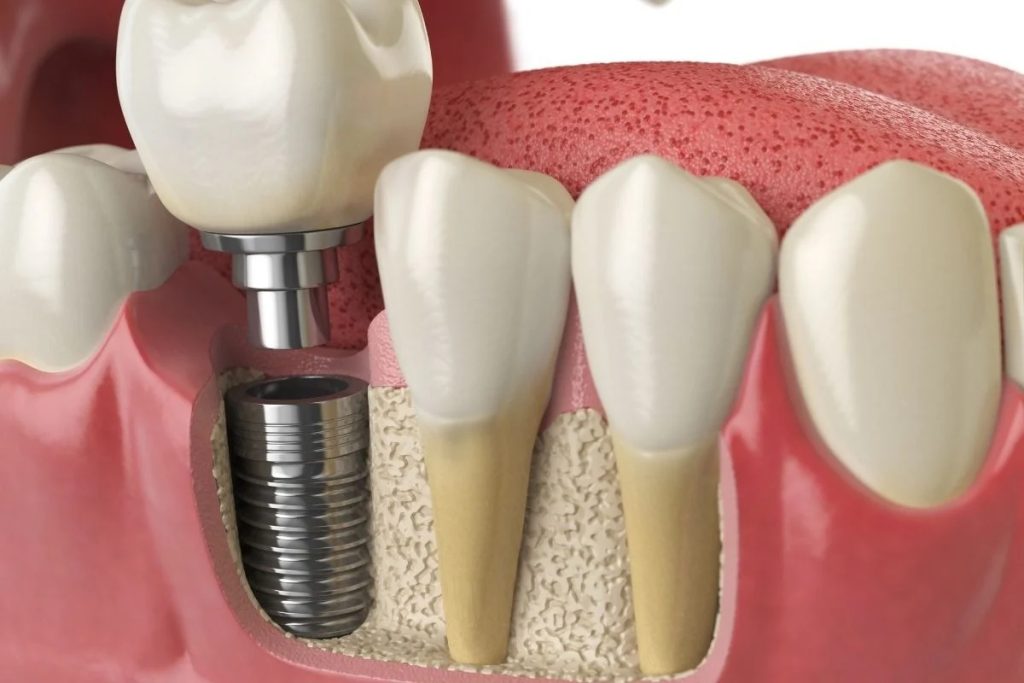
Dental implants are artificial tooth roots placed into the jawbone. Most conventional implants are made from titanium or titanium alloys, although other materials are available.
After healing, the implant may support a crown, bridge, or denture. For a single missing molar, an implant-supported crown may be considered.
The restoration is designed to replace the visible tooth without requiring a conventional bridge supported by adjacent teeth. However, implants are not suitable for every patient.
Adequate bone support, healthy surrounding tissues, and appropriate treatment planning are essential.
Can a Dental Implant Restore Normal Chewing?
An implant-supported crown can provide a stable surface for chewing. Many patients can eat a wider range of foods comfortably.
However, an implant does not behave exactly like a natural tooth. Natural teeth have periodontal ligaments that provide sensory feedback and help absorb certain forces.
Dental implant restorations connect directly to the surrounding bone through osseointegration. Because of this difference, careful bite adjustment and ongoing maintenance are important. Patients should also understand that implant treatment does not guarantee identical chewing function in every case.
Who May Be a Candidate for a Dental Implant?
Dental implant candidacy depends on several factors.
These include:
- Overall medical health
- Jawbone volume and quality
- Gum health
- Smoking or tobacco use
- History of periodontal disease
- Teeth grinding
- Oral hygiene habits
- The position of neighboring teeth
- Available space for the restoration
Certain medical conditions or medications may affect healing. A thorough medical and dental history helps identify potential risks.
At Modern Dental, Dr. Royce can evaluate the missing-tooth area and discuss whether implants are appropriate.
What Happens During Dental Implant Treatment?
The implant process involves several stages.
Initial Examination
The dentist examines the missing-tooth area and surrounding structures. Dental imaging is used to assess available bone and nearby anatomical features.
Three-dimensional imaging may be recommended when appropriate.
Treatment Planning
The dentist evaluates implant position, restoration design, and the condition of neighboring teeth. If insufficient bone is present, bone grafting may be considered. Not every patient requires grafting.
Implant Placement
The implant is surgically placed into the jawbone. Local anesthesia is used, and additional comfort options may be discussed.
Healing and Osseointegration
The surrounding bone gradually integrates with the implant surface. Healing time varies by patient and procedure.
Final Restoration
Once the implant is ready to support a restoration, the dentist an attach an abutment and crown. The crown is checked for appearance, fit, and bite contact. Follow-up care helps monitor the implant and surrounding tissues.
What Are the Alternatives to a Dental Implant?
Implants are not the only option for replacing a missing molar.
Dental Bridges
A conventional bridge replaces the missing tooth using neighboring teeth for support.
This may be appropriate when adjacent teeth already need crowns or when implants aren’t suitable.
However, conventional bridges often require preparation of supporting teeth.
Removable Partial Dentures
A removable partial denture can replace one or more missing teeth.
It may be considered when fixed treatment is not suitable or when several teeth are missing.
Leaving the Space Unrestored
In select situations, a dentist may recommend monitoring instead of immediate replacement. The decision depends on the missing tooth’s location, chewing function, bite stability, and patient preferences.
A consultation can help compare the benefits and limitations of each approach.
How Long Can a Dental Implant Last?
Dental implants can function for many years, but they require ongoing care. The implant itself and the attached restoration have different maintenance needs. Crowns may eventually need repair or replacement. Implants can also develop inflammation or bone loss around the surrounding tissues.
To help maintain implant health:
- Brush twice daily.
- Clean around the implant restoration.
- Use recommended interdental cleaning tools.
- Attend regular dental examinations.
- Avoid tobacco use.
- Report bleeding, swelling, or discomfort.
- Discuss grinding or clenching with the dentist.
Long-term monitoring is important even when the implant feels comfortable.
When Should You Replace a Missing Back Tooth?
No single replacement timeline applies to every patient. However, discussing treatment soon after tooth loss may help preserve available options. Bone changes and tooth movement can complicate future restoration.
Patients in Boise, Meridian, Eagle, and nearby communities should schedule an exam to understand the condition of the area where the tooth was lost. Even if the tooth was removed years ago, replacement may still be possible.
Additional treatment may be necessary depending on the available bone and tooth alignment.
Restore the Function You May Not Realize You Have Lost
A missing back tooth can gradually change how you chew and how neighboring teeth function.
Although the gap may not affect your smile’s appearance, it can influence your long-term dental health.
If you are missing a molar, Dr. Royce can evaluate your bite and discuss tooth replacement options at Modern Dental in Boise.
Schedule a consultation to learn whether a dental implant could help restore your chewing function.
Frequently Asked Questions
1. Do I need to replace a missing back tooth if nobody can see it?
Replacement may be recommended to support chewing function and bite stability. Our dentist can evaluate whether the missing tooth is affecting your oral health.
2. Can a dental implant replace just one molar?
Yes. A single implant-supported crown can replace one missing molar when there is enough support and space.
3. Can I get an implant years after losing a tooth?
Possibly. Long-term tooth loss can cause bone changes, but an examination can determine whether implant treatment is still an option.
4. Is dental implant surgery painful?
Local anesthesia helps manage discomfort during placement. Temporary swelling or soreness may occur afterward.
5. Are dental implants more stable than removable dentures?
Implant-supported restorations can provide fixed support. However, the appropriate option depends on your dental condition and treatment goals.
6. Where can I discuss dental implants in Boise?
Schedule a dental implant consultation to assess the missing tooth area, available bone, and potential replacement options.