
You may have fallen, suffered a sports injury, or accidentally hit your mouth several months ago. At the time, your tooth seemed fine. Now, you have noticed that one tooth looks darker than the others. A tooth that gradually turns gray, brown, or yellow after an injury may be showing signs of internal changes.
At Modern Dental in Boise, we can examine injured or discolored teeth to determine whether the change is cosmetic or related to the tooth’s health. Not every dark tooth requires an RCT. However, discoloration after trauma shouldn’t be ignored.
Why Can a Tooth Change Color After an Injury?
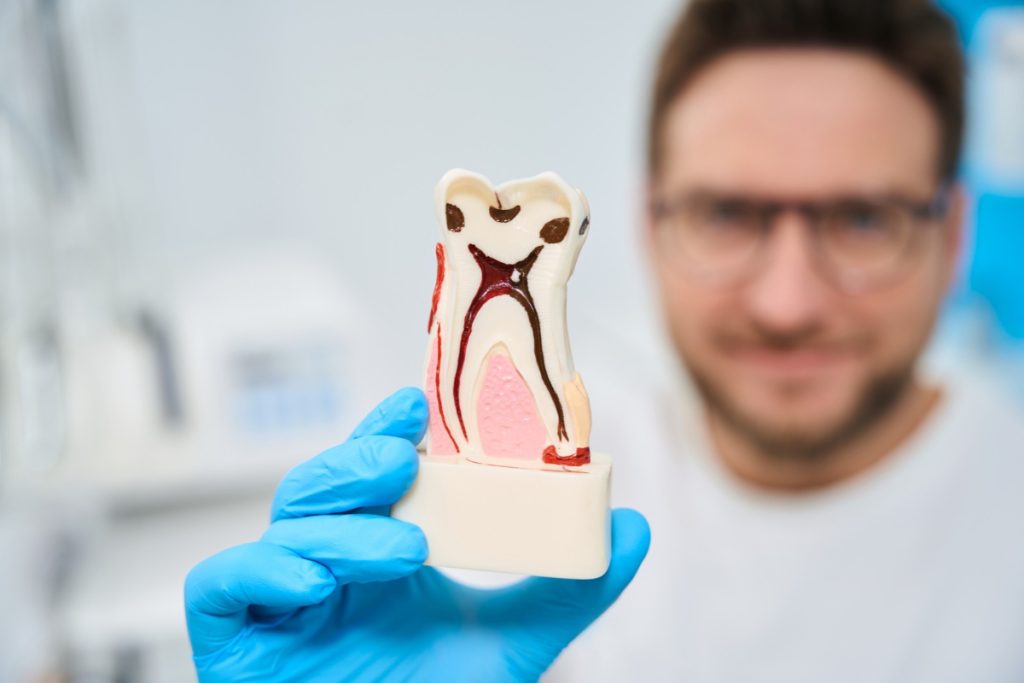
Each tooth contains a space filled with pulp tissue. The pulp includes nerves, blood vessels, and connective tissue that support tooth development and sensation. A strong impact can damage the blood supply or other tissues inside the tooth. This may change the tooth’s appearance.
Internal Bleeding
After trauma, bleeding within the pulp chamber may darken the tooth. The color change can appear gradually. Some teeth recover after an injury, while others develop lasting internal damage.
Pulp Necrosis
Pulp necrosis occurs when the tissue inside a tooth dies. This can happen when trauma damages the blood supply.
The tooth may become gray or brown as internal tissues break down. Besides, the tooth with necrotic pulp may develop an infection even if it doesn’t hurt.
Pulp Canal Calcification
Some injured teeth become more yellow because additional hard tissue forms inside the pulp space. This process is sometimes called pulp canal obliteration.
A yellow color change does not automatically mean that the pulp is infected. Monitoring and diagnostic testing help determine whether treatment is necessary.
Can a Tooth Turn Dark Without Causing Pain?
Yes, a tooth may change color without producing noticeable discomfort. Pain is not always a reliable indicator of pulp health. Some patients develop sensitivity immediately after an injury.
Others experience no symptoms until months or years later. Possible warning signs include:
- Gray or brown discoloration
- Sensitivity when biting
- Swelling near the tooth
- A small bump on the gums
- Persistent tenderness
- A loose tooth
- Changes in the surrounding gum tissue
A dental exam matters even if discoloration is the only symptom.
How Does a Dentist Examine a Dark Tooth?
The evaluation usually begins with a discussion about the original injury. The dental practitioner may ask when the injury occurred and whether the tooth was loose, fractured, or painful afterward.
The examination may include several tests.
Pulp Sensitivity Testing
Cold or electric testing can help evaluate the tooth’s response to stimulation. These tests do not directly measure blood circulation. Results must be interpreted alongside other clinical findings, particularly after recent trauma.
Dental X-Rays
X-rays can help identify root fractures, changes around the root, or narrowing of the pulp canal. Some problems may not be visible during the earliest stages.
Examination of the Surrounding Tissues
The dentist checks for swelling, tenderness, mobility, and gum changes. The condition of neighboring teeth may also be evaluated.
At Modern Dental, Dr. Royce can review the examination findings and determine whether monitoring, root canal treatment, or another approach is appropriate.
When Does a Dark Tooth Need a Root Canal?
Root canal treatment may be recommended as an effective family dentistry option when the pulp becomes necrotic or irreversibly inflamed. Clinicians base the decision on diagnostic findings, not color alone.
An RCT removes damaged or infected pulp tissue from inside the tooth. The canal system is then cleaned, shaped, and sealed.
This treatment can help preserve a natural tooth that might otherwise require extraction. However, not every injured tooth can be saved. Severe root fractures or extensive structural damage may affect the prognosis.
What Happens During Root Canal Treatment?
Root canal treatment is commonly completed under local anesthesia. The procedure generally involves the following steps.
Step 1: Accessing the Pulp Chamber
The professional creates a small opening to reach the internal canal system.
Step 2: Removing the Affected Tissue
Damaged or infected pulp tissue is removed. The dentist cleans and shapes the root canals.
Step 3: Disinfecting the Canals
The canal system is irrigated to reduce bacteria and remove debris.
Step 4: Sealing the Tooth
The dental professional fills and seals the prepared canals.
Step 5: Restoring the Tooth
A filling or crown may be needed to restore the tooth’s structure. The appropriate restoration depends on the tooth’s location and remaining strength.
Will a Root Canal Make the Tooth White Again?
RCT addresses tooth health, not necessarily its color. A treated tooth may remain darker than neighboring teeth. Cosmetic options may include internal whitening, external whitening, bonding, or a veneer.
Internal whitening is performed only when clinically appropriate. A dentist must assess the tooth and explain the possible benefits and limitations.
What Happens If You Ignore a Dark Tooth?
The outcome depends on the cause of discoloration. Some teeth remain stable and require only monitoring.
Others may develop infection or changes around the root. An untreated infection can damage surrounding bone and tissues. It may eventually cause swelling, pain, or an abscess.
For patients in Boise and surrounding Treasure Valley communities, early evaluation provides an opportunity to identify problems before symptoms become more severe.
How Can You Protect a Tooth After an Injury?
If you recently injured a tooth, schedule a dental exam. Avoid biting hard foods with the affected tooth until it has been evaluated.
Continue gentle brushing and flossing. If the injury occurred during sports, ask about a properly fitted mouthguard for future activities.
Follow-up examinations may be necessary because complications can develop after the initial injury.
If a permanent tooth is knocked out completely, seek emergency dental care immediately. Handle it by the crown, avoid touching the root, and keep it moist in milk or an appropriate tooth-preservation solution.
A Dark Tooth Deserves More Than a Cosmetic Fix
A tooth that changes color after an injury may be signaling internal damage. Treating the appearance without identifying the cause could let an underlying problem go unnoticed.
If you have noticed a darkened tooth after an accident, Dr. Royce can examine it and discuss appropriate treatment options at Modern Dental.
Schedule an evaluation to understand what the discoloration means for your oral health.
Frequently Asked Questions
1. Does a gray tooth always need a root canal?
No. Discoloration can have several causes. Diagnostic testing helps determine whether the pulp is damaged or infected.
2. Can a tooth die months after an injury?
Yes. Pulp damage may become apparent long after the original trauma. Follow-up examinations can identify delayed complications.
3. Is root canal treatment painful?
Local anesthesia is used to manage discomfort during treatment. Some tenderness afterward is possible.
4. Can a dark front tooth be saved?
Many discolored teeth can be preserved, depending on the condition of the pulp, root, and surrounding tissues.
5. Should I schedule an appointment if my dark tooth does not hurt?
Yes. A color change after trauma deserves evaluation, even without pain.
6. Can I receive a root canal evaluation in Boise?
You can schedule a dental examination to assess the injured tooth and discuss whether root canal treatment is necessary.